
From Montessori to Traditional School: What Parents Need to Know
A common question for Montessori parents is how their child will adapt to a traditional school environment. Discover how the unique skills and qualities developed in a Montessori setting often lead to a smooth and successful transition.
It is one of the most frequently asked questions we hear from parents considering a Montessori education for their child: “What happens when they transition to a traditional school? Will they be able to keep up? Will they fall behind?” This is a natural and valid concern. You want to provide your child with the best possible foundation, and the thought of a difficult transition can be daunting. The wonderful truth, however, is that an authentic Montessori education does not just prepare a child for their next school; it prepares them for life.
Dr. Maria Montessori observed that children who are free to explore their interests in a carefully prepared environment develop a deep love of learning and a remarkable set of skills that serve them well in any setting. Rather than finding themselves at a disadvantage, Montessori children often thrive when they move into traditional classrooms, becoming leaders and engaged, self-directed learners.
Beyond Academics: The Foundation of Executive Function
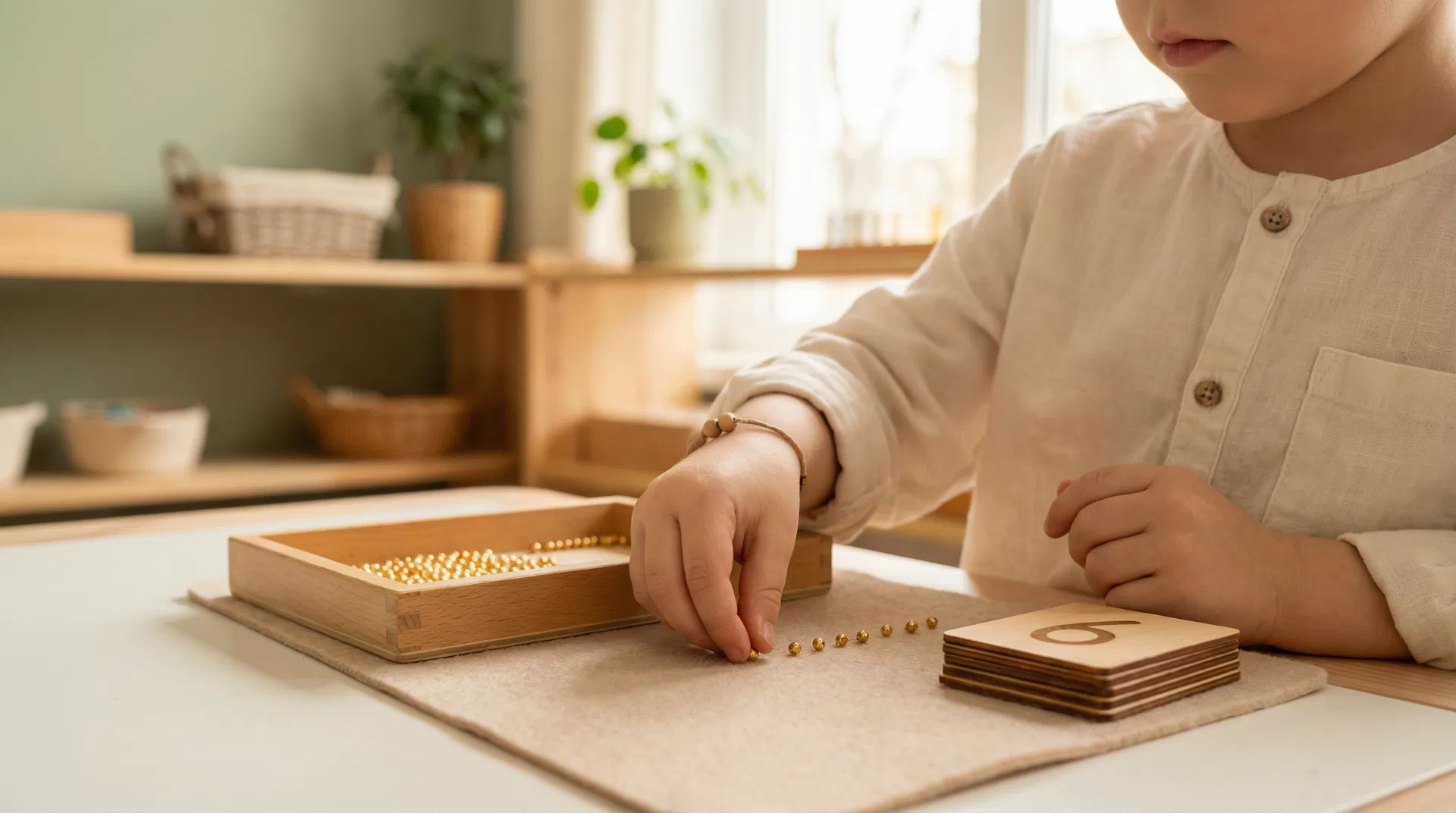
One of the greatest gifts of a Montessori education is the development of strong executive functions. These are the critical mental skills that allow us to plan, focus, remember instructions, and juggle multiple tasks successfully. In a Montessori prepared environment, children are not simply passive recipients of information. They are active participants in their own learning, guided by their interests and the thoughtful structure of the work cycle.
When a child chooses a piece of work, gathers the materials, completes the task, and returns it to the shelf, they are practicing every aspect of executive function. They are exercising their ability to initiate, plan, and see a task through to completion. This “freedom within limits” fosters a profound sense of responsibility and self-regulation. These are the very skills that traditional school teachers say are most crucial for success in their classrooms.
A Natural Love of Learning
In a traditional setting, learning is often driven by the teacher and the curriculum. In a Montessori environment, it is driven by the child’s innate curiosity. Dr. Montessori believed that “the greatest sign of success for a teacher... is to be able to say, ‘The children are now working as if I did not exist.’”
By allowing children to delve deeply into subjects that fascinate them during their sensitive periods, we are nurturing a genuine passion for discovery. This intrinsic motivation is a powerful tool. When a child who loves to learn enters a traditional school, they see it as another opportunity to explore and grow. They are more likely to ask insightful questions, seek out new information, and engage with the material on a deeper level, not just for a grade, but for the pure joy of understanding.
The Socially Adept and Confident Child
The mixed-age group is a cornerstone of the Montessori prepared environment. Younger children learn from their older peers, who in turn solidify their own knowledge by acting as mentors. This creates a collaborative, supportive community where children learn to navigate social dynamics with grace and courtesy.
Research has consistently shown that this environment fosters a high degree of social and emotional intelligence. A well-known study published in the journal *Science* found that Montessori children scored higher on measures of social cognition, demonstrated a greater sense of fairness and justice, and were more likely to engage in positive, collaborative play. This ability to work well with others, to resolve conflicts peacefully, and to feel confident in a group setting is an invaluable asset in any school environment.
What the Research Says
The evidence is clear: children with a Montessori foundation are exceptionally well-prepared for what comes next. Studies consistently find that Montessori graduates not only match but often exceed their peers from traditional programs in academic performance, especially in reading and math. More importantly, they are praised for their creativity, critical thinking, and ability to adapt to new situations. They are not falling behind; they are often leading the way.
Montessori at Home: A Tip for a Smooth Transition
As your child prepares for a new school, you can support them by extending Montessori principles into your home. Create a “prepared environment” for homework—a quiet, organized workspace with all the necessary supplies. Encourage them to manage their own time and assignments, offering guidance rather than directives. This reinforces the independence and self-reliance they have cultivated and shows them that the skills they learned in their Montessori work are valuable everywhere.
Prepared for the Journey
Choosing a school for your child is a significant decision. While the transition to a new environment can seem like a leap of faith, you can be confident that a Montessori education has given your child the tools they need to land on their feet and flourish. They are adaptable, resilient, independent thinkers who know how to learn and love to do it. They are, in the truest sense of the word, prepared for the journey ahead.
Curious to see how our schools prepare children for life? We invite you to book a tour of our prepared environments at our Vancouver or Surrey campuses and witness the joy of learning for yourself.
See Montessori in Action
The best way to understand authentic Montessori education is to experience it firsthand. Book a tour and visit our prepared environments.
BOOK A TOUR